Cultural Commentary
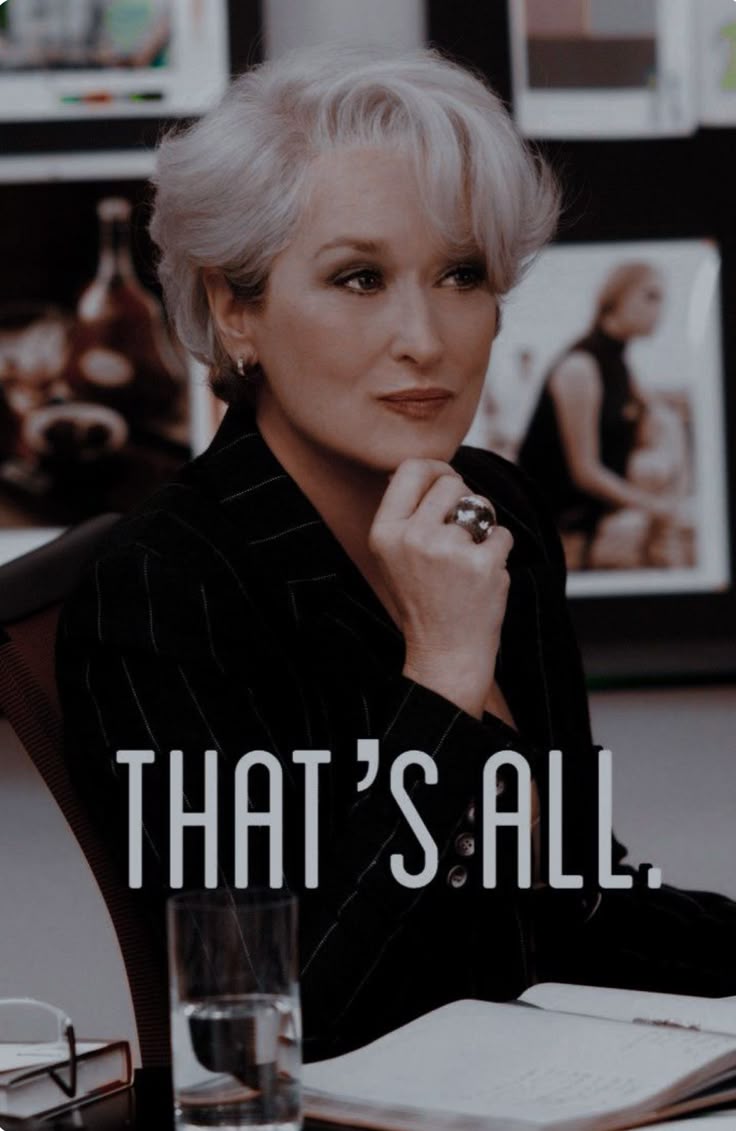
Why Miranda Priestly Was Never the Villain to Me
Why ambition is so often mistaken for villainy, especially when it wears a woman's face.
There is a very specific archetype that film and television have taught audiences to fear:
The ambitious woman.
Not necessarily the immoral woman. Not necessarily the cruel woman. The woman who takes herself seriously. The woman who values excellence. The woman who is disciplined, discerning, and unwilling to minimize herself for the comfort of everyone around her.
Few characters embody that archetype as completely as Miranda Priestly.
For years, The Devil Wears Prada has been remembered as a cautionary tale about what happens when ambition goes too far. Miranda is demanding. People fear her. Her marriage is collapsing. Her standards are impossible. Her career consumes nearly every part of her life.
And yet, every time I revisit the film, I find myself arriving at the same conclusion:
I never saw Miranda Priestly as the villain.
I saw a woman who understood the weight of excellence.
Motion Editorial
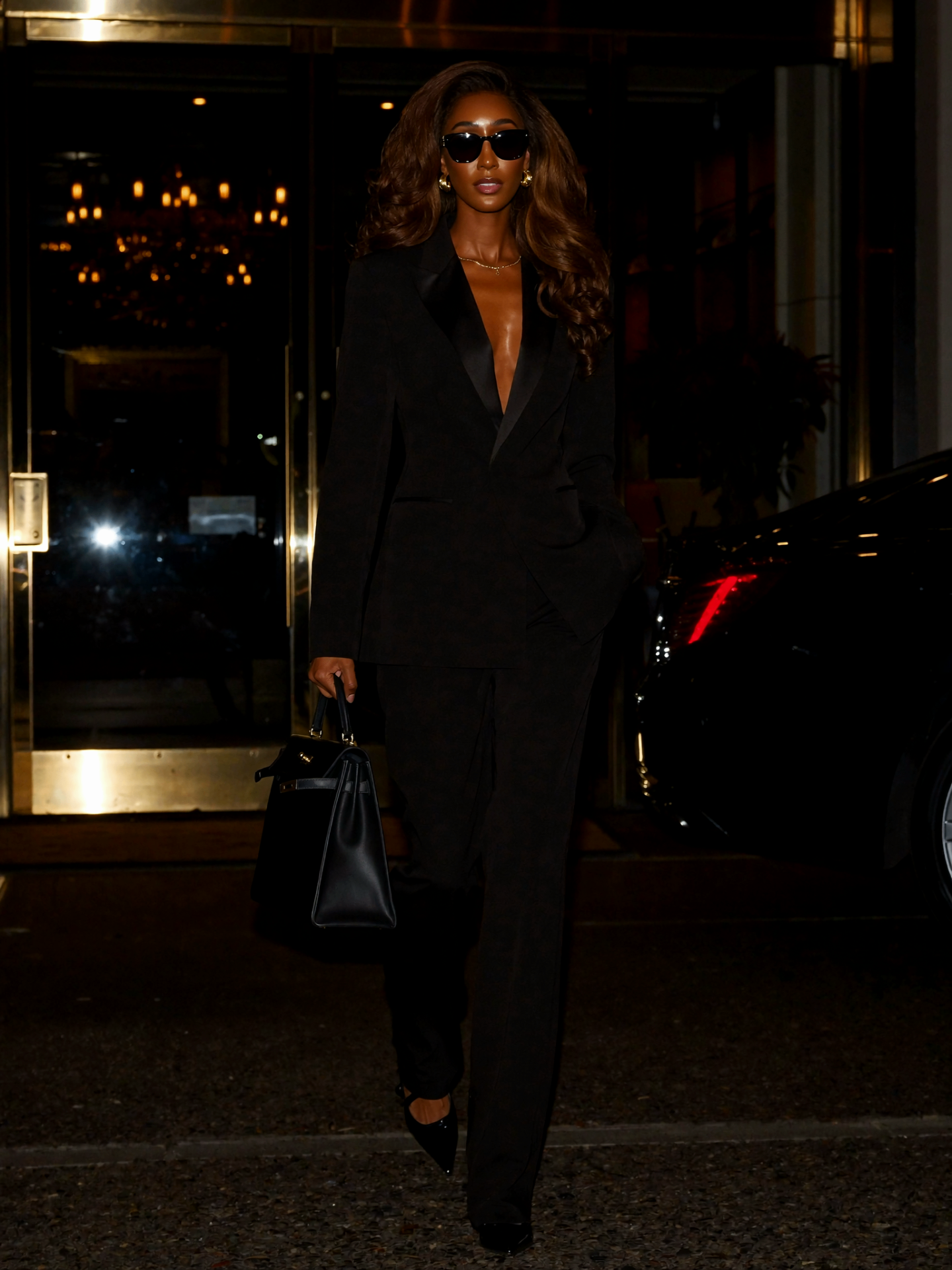
The visual interpretation of ambition, endurance, and modern power dressing.
The Punishment of the Ambitious Woman
What fascinates me about The Devil Wears Prada is not simply that Miranda is difficult.
It is the way the film repeatedly connects her ambition to punishment.
She is extraordinarily successful, but we are constantly reminded of what that success has supposedly cost her.
Her relationships.
Her softness.
Her likability.
Her ability to be understood by the people around her.
The message is subtle, but familiar: perhaps a woman can have extraordinary professional power, but she should expect to pay for it somewhere else.
And that is where I begin to push back.
There is nothing inherently tragic about a woman loving her work.
There is nothing morally suspicious about taking excellence seriously.
There is nothing unnatural about being deeply invested in the thing you have spent years building.
Women are not a monolith.
Some women want marriage and children to sit at the absolute center of their lives.
Some women want their careers there.
Some women want both.
Some want neither.
The problem begins when we decide there is only one acceptable version of fulfillment and then punish women, culturally or narratively, for choosing differently.
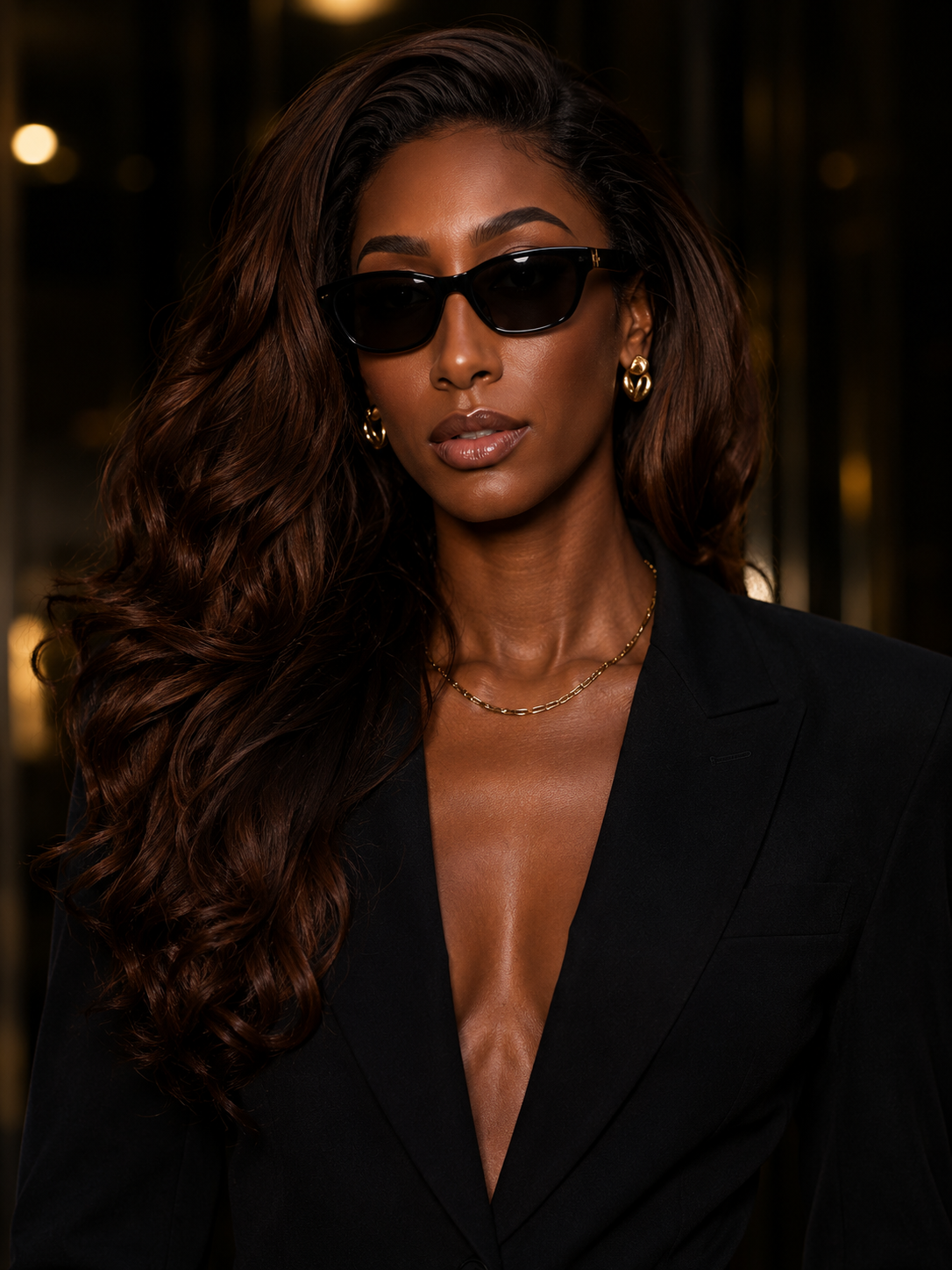
Ambition becomes threatening when a woman stops asking permission to have it.
Andy Wasn't Losing Herself. She Was Expanding.
Then there is Andy Sachs.
Andy enters Runway dismissive of fashion and largely uninterested in the world around her. She doesn't understand the language, the expectations, or even the magnitude of the opportunity sitting in front of her.
Then she learns.
She becomes better at her job.
She sharpens her instincts.
Her presentation changes.
Her confidence grows.
Her access expands.
She begins to understand an industry she once considered frivolous.
And somehow, this transformation is framed as evidence that she is losing herself.
I have always found that interpretation strange.
What if Andy wasn't losing herself?
What if she was expanding?
Growth is often uncomfortable for the people who became accustomed to an earlier version of us.
When someone's confidence grows, their standards may change.
Their interests may change.
Their schedule may change.
Their wardrobe may change.
Their relationships may change.
That does not automatically mean they have become worse.
Sometimes it simply means they have become more.
Nate Was the Horror Story
The relationship that bothered me far more than Miranda ever did was Andy's relationship with Nate.
As Andy begins to succeed, Nate increasingly treats her growth as a character flaw.
Her schedule becomes a problem.
Her commitment becomes a problem.
Her clothes become a problem.
Her increasing investment in her work becomes a problem.
He positions himself as the grounded one while Andy is supposedly being seduced by superficiality.
But through a different lens, the dynamic looks much less noble.
It looks like insecurity.
There is a particular kind of loneliness ambitious women understand: discovering that someone who loved you when you were dreaming becomes uncomfortable once those dreams begin taking shape.
Sometimes people support your ambition when it is theoretical.
When it doesn't disrupt dinner.
When it doesn't require travel.
When it doesn't change your appearance.
When it doesn't increase your confidence.
When it doesn't put you in rooms they cannot enter.
The real test comes when your evolution requires the people who love you to evolve too.
Nate didn't seem interested in doing that.
He wanted the version of Andy he already understood.
And when she began becoming someone larger than that version, he treated her growth like betrayal.
That, to me, is far closer to the ambitious woman's horror story.
Not the demanding female boss.
The unequally yoked partner who needs you to remain small enough for the relationship to stay comfortable.
She's not the villain. She's the vision.
The Woman We Keep Turning Into a Villain
Miranda is not alone.
There is a long tradition of ambitious women being written as cautionary tales.
Even Glenn Close's Cruella de Vil in 101 Dalmatians plays with a strange variation of the same idea.
Cruella is obviously a villain. Her behavior is outrageous, destructive, and morally indefensible.
But beneath the theatrical evil is an interesting tension.
She looks at Anita, a talented designer settling into domestic life, and seems almost offended by the possibility that a gifted woman would allow her talent to become secondary to a man.
Her conclusion is extreme.
The underlying question is not.
How often are talented women encouraged to make themselves secondary?
How often is professional obsession celebrated in men as genius while the same quality in women becomes evidence that something is emotionally wrong with them?
A man consumed by his career becomes disciplined.
Focused.
Visionary.
Powerful.
A woman consumed by hers becomes cold.
Difficult.
Intimidating.
Selfish.
Somewhere along the way, female ambition became something that required an explanation.
Visual Story
The Transition
Power dressing isn't about suffering for appearances. It's about understanding what the moment requires, and knowing when it's time to move.
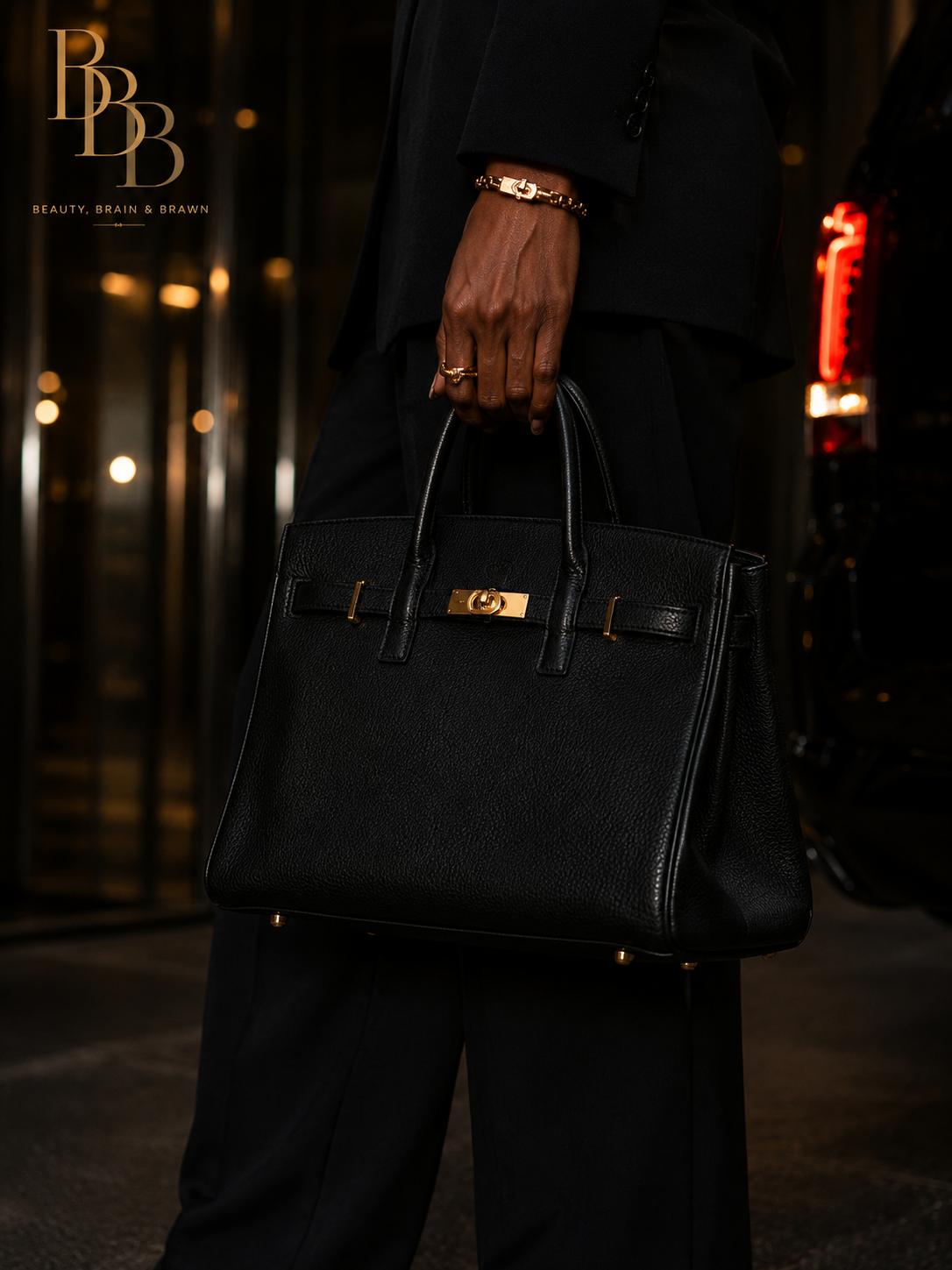
Structure
The bag is polished, deliberate, and functional. Nothing about the look exists simply to decorate the woman wearing it.
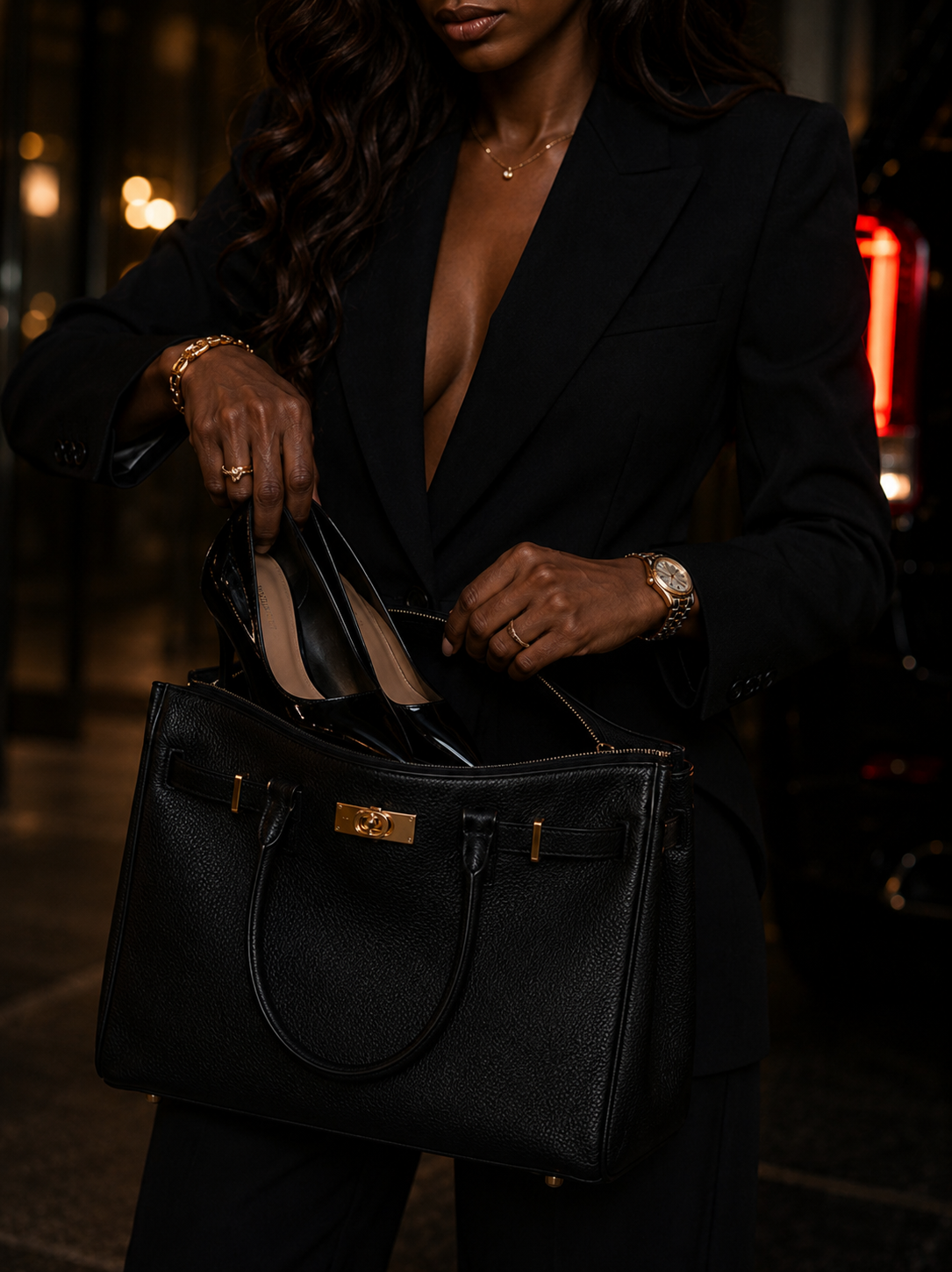
The Shift
The meeting ends.
The performance does not need to continue.
The pumps go into the bag.
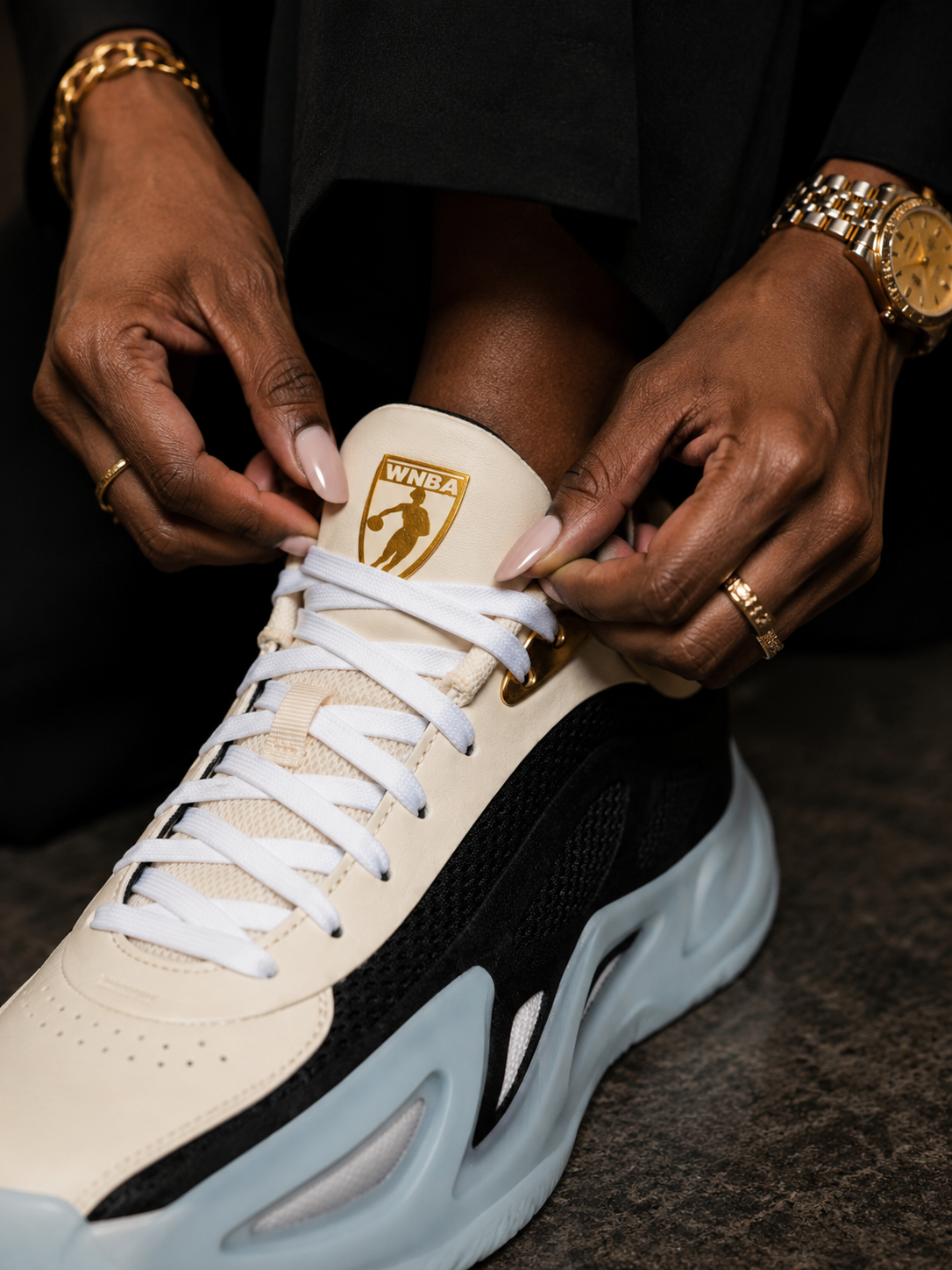
The Ritual
The sneaker is adjusted with intention, the gold WNBA emblem visible at the center of the frame.
A quiet reminder that strength, performance, and endurance can exist beneath tailoring.
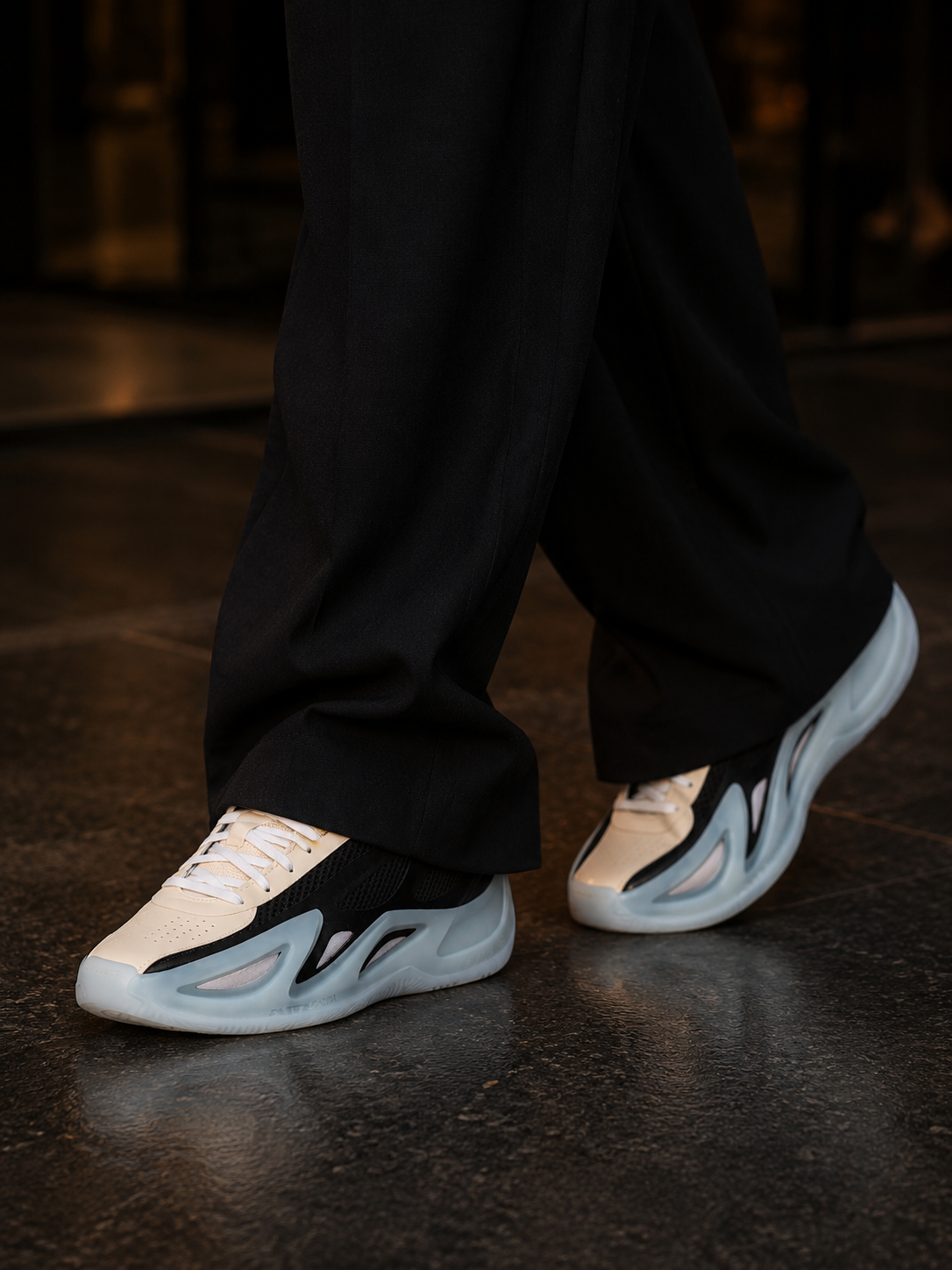
Movement
The heels commanded the room.
The sneakers preserve the momentum.
Time
The ultimate luxury is not appearing busy.
It is knowing what deserves your time.
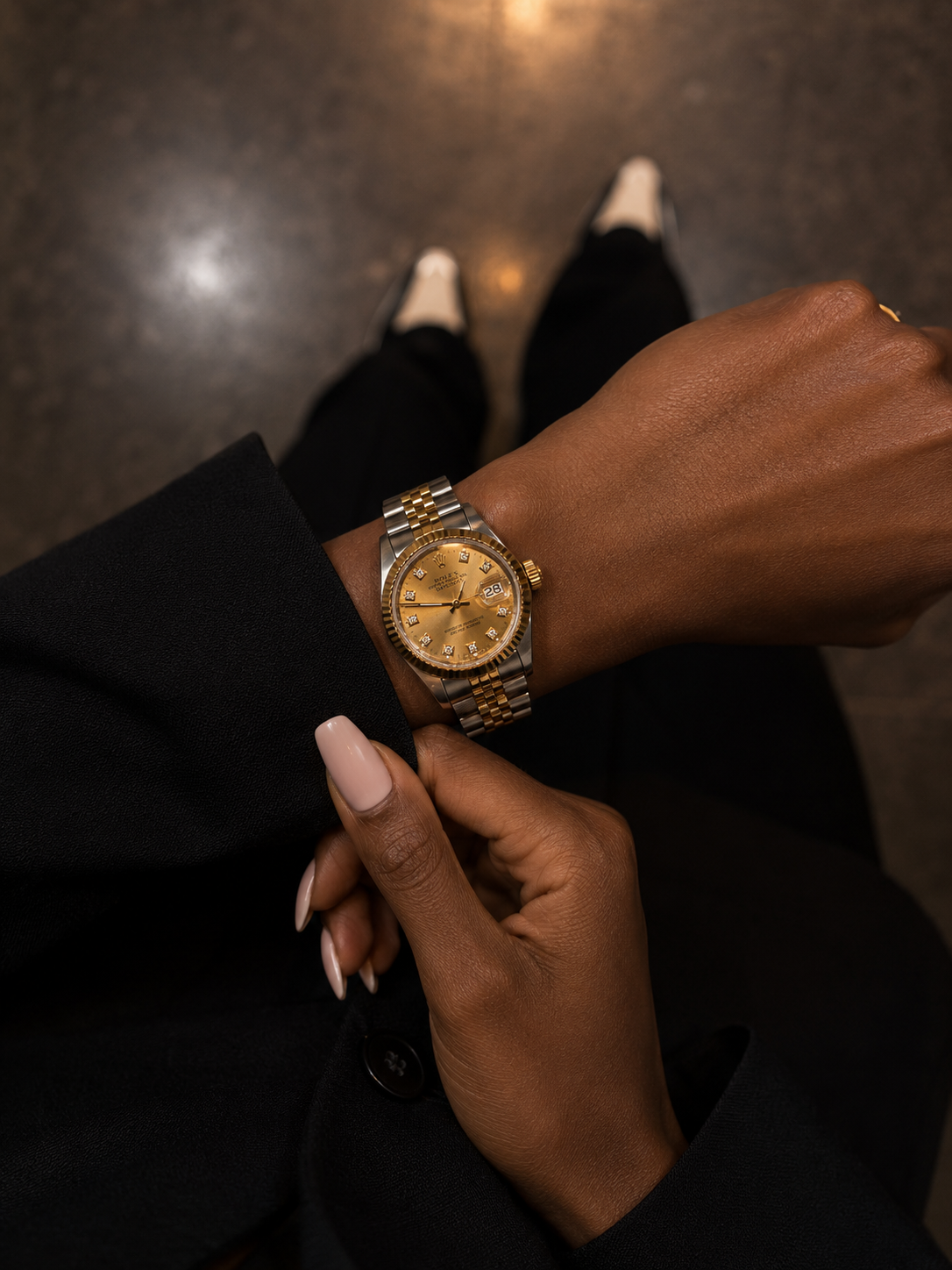
Power Doesn't Have One Uniform
That is why the styling for this editorial mattered.
I did not want to recreate Miranda Priestly.
I wanted to reinterpret what power looks like now.
The structured black suit still communicates authority.
The pumps still have their moment.
But eventually they come off.
The sneakers go on.
Because modern ambition requires movement.
Power dressing should not mean voluntarily remaining uncomfortable simply because discomfort has historically been associated with professionalism.
There is nothing powerful about suffering for the aesthetic of power.
The goal is not to look capable.
The goal is to remain capable.
The heels command the room.
The sneakers preserve the momentum.
The watch protects the time.
The suit establishes the standard.
Every detail becomes part of the same argument:
Power is most compelling when it is intentional.
Ambition Is Not a Moral Failure
What I reject most is the idea that ambitious women must somehow be corrected.
That we need a redemption arc because we chose work.
That success is incomplete without romantic validation.
That excellence becomes arrogance when a woman expects it consistently.
That boundaries become coldness.
That certainty becomes intimidation.
That evolving beyond the expectations of the people around us somehow means we have forgotten who we are.
Maybe the problem isn't that ambitious women have become too much.
Maybe the problem is that society remains deeply attached to versions of women that are easier to accommodate.
Miranda Priestly was not perfect.
She could be ruthless.
She could be unnecessarily harsh.
She could wield power without enough consideration for the people beneath her.
But that is not the same argument as saying her ambition was the problem.
Those distinctions matter.
Women should be allowed to be complicated.
Powerful women especially.
They should be allowed to be brilliant and flawed.
Successful and emotionally complex.
Disciplined and feminine.
Demanding and deeply human.
We do not need every ambitious woman to become softer before we decide she is worthy of understanding.
Maybe She Was the Vision
The older I get, the less interested I am in stories that tell women there is something inherently tragic about wanting more.
More responsibility.
More influence.
More mastery.
More ownership.
More expression.
More of themselves.
Ambition does not guarantee fulfillment.
Neither does romance.
Neither does motherhood.
Neither does money.
Neither does status.
There is no single formula for a meaningful life.
And that is precisely the point.
Women should be allowed to decide what fulfillment looks like for themselves without being turned into cautionary tales when the answer happens to include extraordinary ambition.
So no, Miranda Priestly was never the villain to me.
She was imperfect.
She was formidable.
She was difficult.
She was brilliant.
And perhaps most importantly, she was unapologetically committed to the world she had built.
Maybe that made some people uncomfortable.
But discomfort and villainy are not the same thing.
Sometimes the woman everyone has been taught to fear is simply the woman who refused to shrink.
Cole Woods
Founder & Editor, Beauty, Brain & Brawn
Continue Exploring
Power Dressing
The Cost of Looking Unprepared: Why your wardrobe begins influencing the room before you've said a single word.
Fashion Intelligence
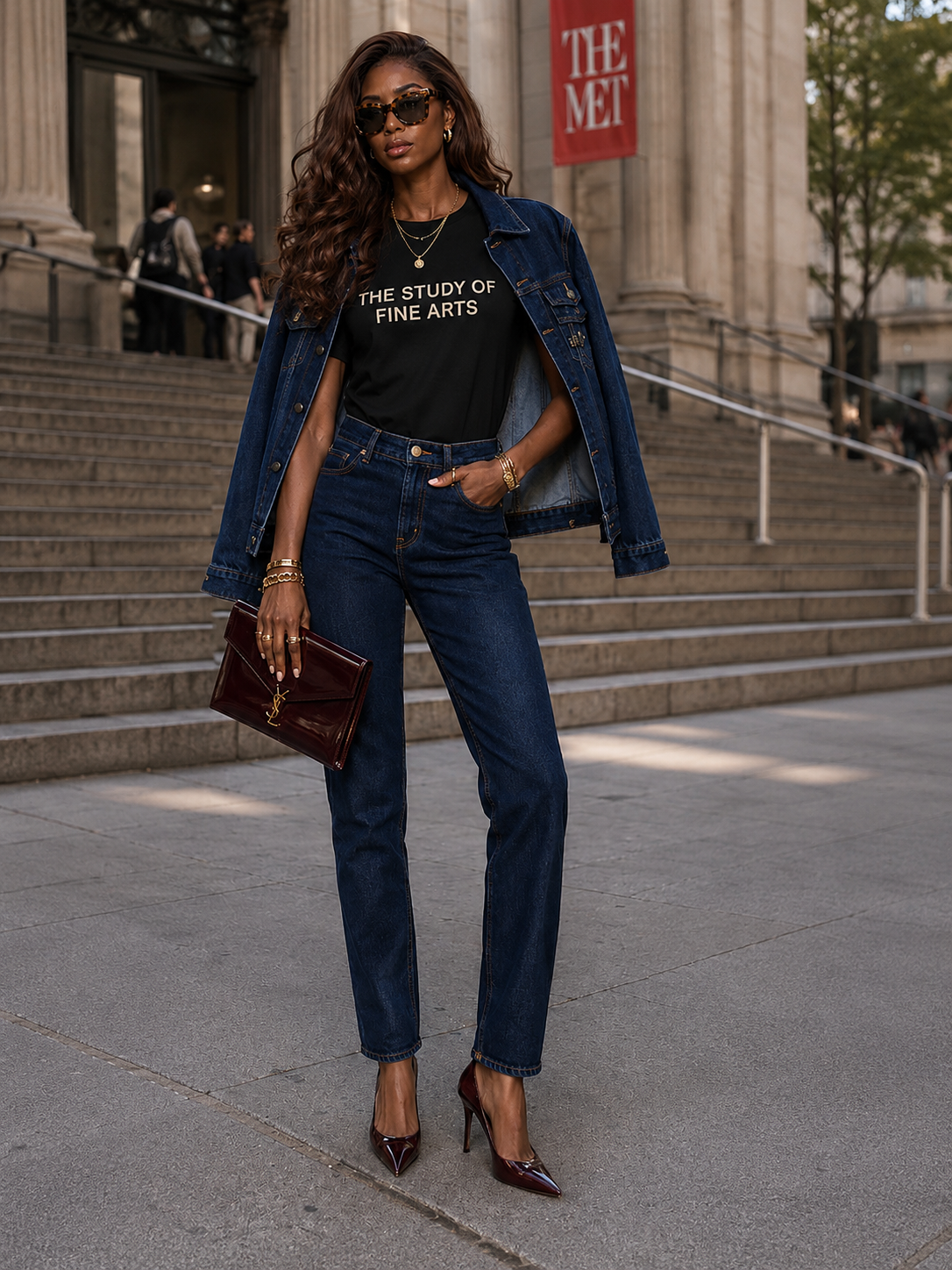
The Study of Fine Arts: what AI outfit visualizations revealed about style, self-study & presence.
Executive Presence